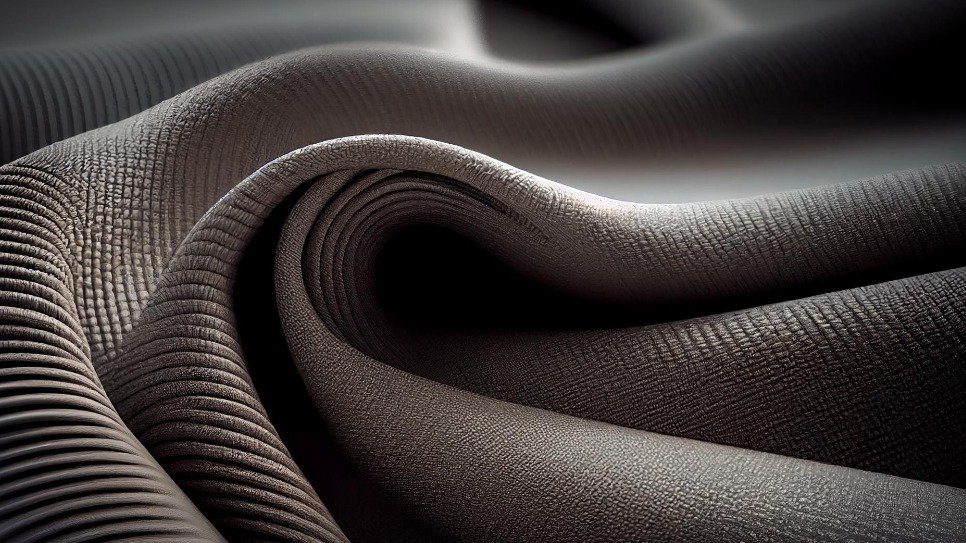
Stretch fabrics are part of daily life.
From sportswear to underwear, elastane is everywhere.
This widespread use raises an important question: does elastane have microplastics.
Elastane is also known as spandex.
It is valued for elasticity, comfort, and durability.
However, elastane is a fully synthetic polymer.
That chemical identity is central to understanding does elastane have microplastics.
Microplastics are plastic particles smaller than five millimeters.
Textile fibers are now recognized as a major source of these particles.
The United Nations Environment Programme (UNEP) identifies synthetic textiles as one of the largest contributors to primary microplastics released into the environment
https://www.unep.org/interactives/beat-plastic-pollution/
TLDR: Does Elastane Have Microplastics
- Does elastane have microplastics is answered as yes by most scientific definitions
- Elastane is a synthetic polymer fiber that sheds plastic microfibers
- Washing and drying are the main release points
- Textile microfibers account for a large share of ocean microplastics according to IUCN
https://www.iucn.org/resources/issues-brief/marine-plastic-pollution - Gentle laundry habits can significantly reduce shedding
What Elastane Is and Why It Matters
To answer does elastane have microplastics, you must first understand what elastane is.
Elastane is made from polyurethane based polymers.
It is created through chemical synthesis, not from plant fibers.
Because of this, any fiber fragments released from elastane are plastic.
Unlike cotton or wool, elastane does not biodegrade easily.
When it breaks down, it fragments into smaller pieces rather than decomposing naturally.
These fragments meet the scientific definition of microplastics.
Does Elastane Have Microplastics by Scientific
Yes, does elastane have microplastics is confirmed because elastane fibers are plastic polymers.
Microplastics are defined by size and material.
They are solid plastic particles smaller than five millimeters.
Elastane fibers fall into this category once they detach and fragment.
Scientific frameworks used by the World Health Organization (WHO) and UNEP classify synthetic textile fibers as microplastics when released into the environment
https://www.who.int/publications/i/item/9789241516198
https://www.unep.org/resources/report/microplastics-environment
Does Elastane Have Microplastics During Washing
Yes, does elastane have microplastics becomes most relevant during laundry.
Washing creates mechanical stress.
Water movement, friction, and spin cycles loosen fibers.
These fibers then enter wastewater systems.
Research on textile microfiber pollution shows that washing synthetic fabrics releases thousands to millions of fibers per wash.
The International Union for Conservation of Nature (IUCN) estimates that synthetic textiles are responsible for about 35 percent of primary microplastics released to oceans
https://www.iucn.org/resources/issues-brief/marine-plastic-pollution
Elastane is often blended with cotton or viscose.
Even at low percentages, it can influence fabric structure and shedding behavior.
Does Elastane Have Microplastics in Blended Fabrics
Yes, does elastane have microplastics still applies in blends.
Most stretch garments contain between 2 and 10 percent elastane.
That small fraction does not eliminate microfiber release.
Studies show that blended fabrics still shed synthetic fibers.
The elastane component contributes plastic microfibers even if the majority of the fabric is natural.
This is why blended clothing is often included in microfiber assessments.
Environmental Pathways of Elastane Microfibers
Once released, elastane microfibers can move through water, air, and soil systems.
Wastewater treatment plants remove many particles.
However, removal is not complete.
Captured fibers often end up in sewage sludge.
Sewage sludge is sometimes applied to agricultural land.
This transfers microplastics from water to soil.
Airborne fibers from drying and wear also settle as indoor dust.
According to UNEP, microplastics have been detected in marine environments, freshwater systems, soils, and even remote regions
https://www.unep.org/resources/report/microplastics-environment
Does Elastane Have Microplastics and Human Exposure
Yes, does elastane have microplastics matters for exposure discussions.
Humans can be exposed through ingestion and inhalation.
Indoor air often contains textile fibers.
Clothing wear contributes to this fiber load.
The World Health Organization has confirmed that microplastics are present in drinking water and food chains
https://www.who.int/publications/i/item/9789241516198
While health effects are still under investigation, exposure pathways are well documented.
How Much Do Textiles Contribute to Microplastic Pollution
Textiles are one of the largest identified sources.
Key statistics from credible bodies include:
- Synthetic textiles contribute around 35 percent of primary microplastics released to oceans according to IUCN
https://www.iucn.org/resources/issues-brief/marine-plastic-pollution - UNEP reports that global textile production exceeds 100 million tonnes per year
https://www.unep.org/news-and-stories/press-release/un-alliance-seeks-put-fashion-path-sustainability - A significant portion of modern textiles contain synthetic fibers
These figures explain why does elastane have microplastics is a high value question.
How to Reduce Elastane Microfiber Release
You cannot eliminate shedding, but you can reduce it.
Practical reduction steps
- Wash garments less frequently
- Use cold water and gentle cycles
- Avoid long or aggressive wash programs
- Do not overload washing machines
- Air dry instead of tumble drying when possible
Helpful tools
- Microfiber catching laundry bags
- External washing machine filters
- Lint filters on dryers
These steps reduce overall microfiber release from elastane fabrics.
Summary Table
| Aspect | What it means for does elastane have microplastics | Practical action |
|---|---|---|
| Fiber type | Elastane is a synthetic polymer | Expect plastic microfibers |
| Laundry | Main release source | Use gentle wash cycles |
| Blends | Still shed microplastics | Do not rely on low percent |
| Environment | Fibers move to water and soil | Reduce release at source |
| Exposure | Inhalation and ingestion possible | Improve indoor air quality |
Conclusion
So, does elastane have microplastics.
Yes. Elastane is a synthetic polymer fiber and it sheds plastic microfibers during use and washing.
This shedding contributes to environmental microplastic pollution and potential human exposure.
The presence of microplastics does not mean you must eliminate all stretch clothing.
It means awareness and better habits matter.
Reducing wash frequency, using gentle cycles, and capturing fibers can significantly lower impact.
Understanding materials is the first step toward practical solutions.
FAQs
Does does elastane have microplastics apply to sportswear
Yes. Sportswear often contains elastane and can shed microfibers during washing.
Is elastane worse than polyester for microplastics
Both are synthetic and shed plastic fibers.
The difference depends on fabric construction and use.
Does low percentage elastane eliminate microplastics
No. Even small elastane content can contribute to microfiber shedding.
Are elastane microplastics harmful to health
Health impacts are still being studied.
The WHO notes exposure exists but evidence is still evolving
https://www.who.int/publications/i/item/9789241516198
How can I avoid does elastane have microplastics exposure
Reduce washing, improve ventilation, and choose durable garments that shed less.
Recent Blogs
Do Paper Plates Have Microplastics
Can You Sweat Out Microplastics