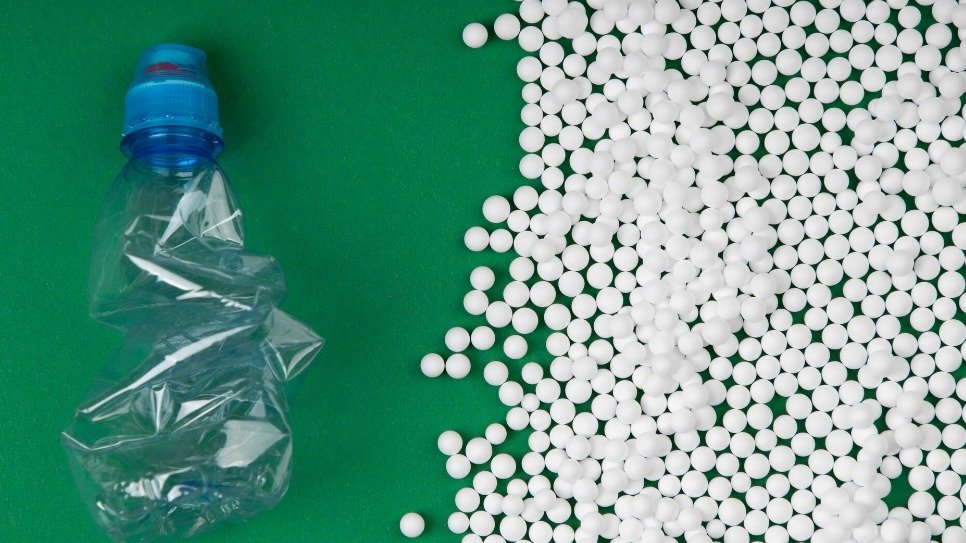
Polypropylene microplastics are among the most common plastic particles detected in the environment.
Polypropylene is used in food containers, packaging, textiles, medical products, and household goods.
Because of its widespread use, polypropylene fragments are now found in water, soil, air, and food systems.
Microplastics are plastic particles smaller than five millimeters.
When polypropylene products degrade, they fragment rather than decompose.
Those fragments become polypropylene microplastics.
The United Nations Environment Programme (UNEP) identifies polypropylene as one of the most produced plastics globally, increasing its likelihood of environmental breakdown.
TLDR: Polypropylene Microplastics
- Polypropylene microplastics are plastic fragments formed from degraded polypropylene products
- Polypropylene is widely used in food packaging, textiles, and consumer goods
- Studies show polypropylene particles in water, food, and air
- WHO and UNEP confirm microplastic exposure pathways exist
- Reducing contact with disposable plastics lowers exposure risk
What Are Polypropylene Microplastics
Polypropylene microplastics are small plastic particles created when polypropylene materials break down due to heat, friction, UV radiation, or mechanical stress.
Polypropylene is a thermoplastic polymer derived from fossil fuels.
It is lightweight, flexible, and resistant to moisture.
These properties make it popular but also persistent.
Unlike natural materials, polypropylene does not biodegrade.
Instead, it fragments repeatedly into smaller particles.
These particles remain plastic at every size stage.
How Polypropylene Microplastics Are Formed
Polypropylene microplastics form through physical and environmental degradation.
Common formation pathways
- UV exposure from sunlight
- Mechanical abrasion during use
- Heat exposure during food storage or washing
- Weathering in landfills and oceans
A review published in environmental polymer research confirms that polypropylene degrades primarily through photo oxidation and mechanical stress, leading to microplastic formation.
https://www.unep.org/resources/report/microplastics-environment
Where Polypropylene Microplastics Are Found
Polypropylene microplastics have been detected across multiple ecosystems.
Major detection environments
- Drinking water and bottled water
- Marine and freshwater systems
- Soil and agricultural land
- Indoor air and household dust
- Food packaging contact surfaces
The World Health Organization (WHO) confirms microplastics are present in drinking water sources globally.
Polypropylene is often one of the most frequently identified polymers in water sampling studies.
Polypropylene Microplastics in Food and Water
Food contact materials are a significant source of Polypropylene microplastics.
Polypropylene is commonly used in food containers, lids, and packaging films.
Heat and repeated use can increase particle release.
A peer reviewed review on food contact plastics found that polypropylene containers can release microplastic particles when exposed to high temperatures or mechanical wear.
https://www.efsa.europa.eu/en/topics/topic/microplastics
The European Food Safety Authority (EFSA) notes that food packaging is an exposure route under active assessment.
Human Exposure to Polypropylene Microplastics
Humans are exposed to polypropylene microplastics through ingestion and inhalation.
Microplastics have been detected in food, water, and indoor air.
Textiles and packaging contribute significantly to indoor dust contamination.
A biomonitoring study published in 2022 reported detectable plastic particles in human blood samples, confirming internal exposure.
https://www.ncbi.nlm.nih.gov/pmc/articles/PMC8994130/
The World Health Organization states that while health effects are not fully understood, exposure pathways are well documented.
Environmental Impact of Polypropylene Microplastics
Polypropylene microplastics persist in ecosystems and interact with living organisms.
Marine organisms ingest polypropylene particles due to their buoyancy.
In soil, particles can alter structure and microbial activity.
The International Union for Conservation of Nature (IUCN) estimates that plastic packaging and consumer products contribute significantly to microplastic pollution in oceans.
Polypropylene’s low density allows it to travel long distances on water surfaces.
Latest Statistics on Polypropylene Microplastics
Here are verified data points from authoritative institutions.
- Polypropylene is among the top three most produced plastics globally according to UNEP
- Synthetic polymers account for a major share of detected microplastics in water samples worldwide according to WHO
- IUCN estimates that primary microplastics from consumer products and textiles contribute over one third of ocean microplastics
These findings explain the growing focus on polypropylene microplastics.
How to Reduce Exposure to Polypropylene Microplastics
You can reduce exposure by minimizing contact with disposable polypropylene products.
Practical reduction strategies
- Use glass or stainless steel for food storage
- Avoid heating food in plastic containers
- Reduce bottled water consumption
- Ventilate indoor spaces regularly
- Choose durable, reusable alternatives
Small changes can significantly reduce long term exposure.
Summary Table
| Aspect | What it means for polypropylene microplastics | Risk level |
|---|---|---|
| Polymer type | Synthetic fossil fuel plastic | High persistence |
| Degradation | Fragments into microplastics | Continuous |
| Food contact | Common packaging material | Moderate exposure |
| Environment | Found in water, soil, air | Widespread |
| Human exposure | Ingestion and inhalation | Confirmed pathways |
Conclusion
Polypropylene microplastics are a direct result of how modern plastics are produced and used.
Polypropylene is durable, lightweight, and versatile, but those same qualities make it persistent once released.
Scientific institutions including WHO, UNEP, and IUCN confirm widespread microplastic presence and exposure routes.
While health impacts are still being researched, reducing unnecessary plastic contact is a reasonable precaution.
Understanding materials is the first step toward lowering risk.
FAQs
Are polypropylene microplastics more common than other plastics
Yes. Polypropylene is widely produced and frequently detected in environmental samples.
Can polypropylene microplastics enter drinking water
Yes. WHO confirms microplastics, including polypropylene, are present in drinking water.
Do polypropylene microplastics break down naturally
No. They fragment into smaller plastic particles rather than biodegrading.
Are polypropylene microplastics harmful to humans
Health effects are still under study.
Exposure pathways are confirmed, but long term impacts remain under investigation.
How can I limit polypropylene microplastics exposure
Reduce disposable plastic use and avoid heating food in plastic containers.